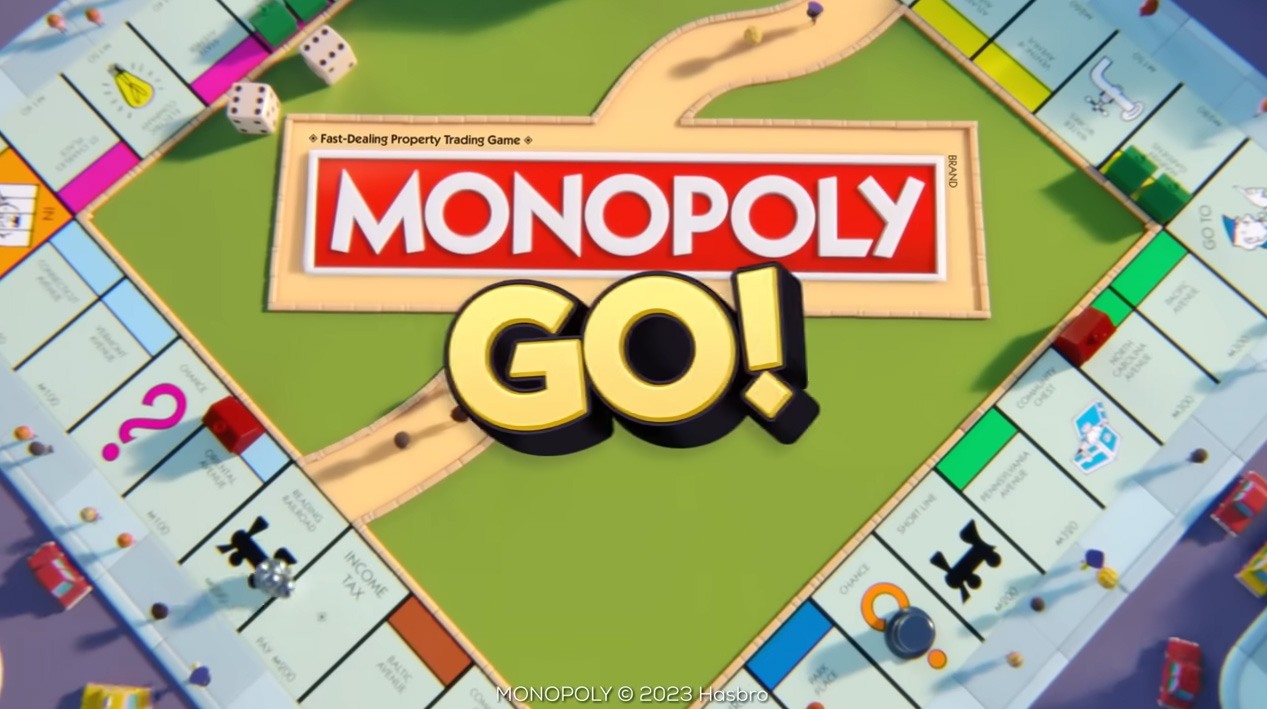

Monopoly GO launched in April 2023 and turned into one of the fastest-growing mobile games in recent memory almost overnight. Built by Scopely rather than Hasbro’s own studio, it takes the bones of the classic board game — dice rolls, properties, rent — and rebuilds them into something closer to a collectible, event-driven mobile title than a faithful digital port of the tabletop original. For anyone trying to make sense of the game’s sprawling systems, sticker albums, and constant rotating events, a proper overview of how everything fits together is genuinely useful.
This isn’t an official wiki, but it covers the same ground a good one would: what the game actually is, how its core loop works, and what the recurring terms mean once you start digging past the first few boards.
What Monopoly GO Actually Is
Strip away the events and cosmetic layers, and Monopoly GO is a single-player board game with social features bolted on. Players roll dice, move around a board, land on properties, and either buy them or pay rent to whoever already owns them. Where it diverges from the classic version is speed — boards are short, dice rolls are earned constantly through everyday actions, and a full board can be completed in minutes rather than the hour-plus a physical game demands.
The properties themselves double as an upgrade system. Owning and leveling up properties on a board increases the cash earned when other players land on them, which matters because Monopoly GO layers in asynchronous multiplayer elements — Shutdowns and Heists let players interact with each other’s boards indirectly, either stealing cash or temporarily disabling a rival’s earning properties. It’s a loose, low-stakes version of competition rather than a head-to-head match.
The Core Currencies and Resources
Cash is the most visible resource, used to buy and upgrade properties on the active board. It flows constantly and gets spent just as fast, since upgrading properties is the main way to increase earnings per roll. Dice rolls function as the game’s real gatekeeper resource, since without them, nothing else moves. They regenerate slowly over time, get handed out through daily rewards and events, and can be purchased directly when a player wants to push through content faster than the free regeneration rate allows.
Stickers form the game’s collection layer, tied to themed albums that rotate regularly. Completing a sticker set within an album typically unlocks a cosmetic reward — a new token, a board skin, or a shield design — and trading duplicate stickers with other players has become one of the more social, community-driven parts of the whole game. Wallet-style community groups dedicated purely to sticker trading have become common outside the app itself.
Events and Limited-Time Modes
Monopoly GO runs almost constantly on a schedule of overlapping events, which is part of what makes it feel different from more static mobile board games. Cash Grab throws Monopoly Money onto the board during a short window, rewarding fast tapping. Wheel Boost events multiply rewards from spinning a color wheel. Partner Events occasionally crossover with other properties entirely, pairing Monopoly GO’s mechanics with characters or themes from unrelated franchises for a limited stretch.
These events are also where most of the game’s real monetization sits. Dice rolls purchased during a high-value event tend to go further than the same purchase made during a quiet stretch, which has trained a lot of players to time their spending around specific event windows rather than buying dice whenever the itch hits.
Shutdowns, Heists, and Player Interaction
The asynchronous multiplayer layer is arguably what separates Monopoly GO from a purely solo board game. A Shutdown temporarily disables one of a rival’s high-earning properties, cutting off their income from it for a set period. A Heist works differently, letting a player attempt to steal a portion of cash directly from another player’s bank, with the target getting a chance to defend depending on their shield status.
Neither mechanic requires real-time interaction — targets are typically shown from a pool of other active players, and the whole exchange resolves in seconds. It’s a lightweight way to inject competitive tension into what’s otherwise a fairly relaxed, idle-friendly game loop, and it’s become one of the more talked-about systems among the community precisely because it adds an element of risk that pure property-building doesn’t have.
Tips for Getting the Most Out of the Game
New players often burn through dice too quickly on early boards without realizing that later boards scale up both cost and reward. Pacing dice usage around active events, rather than spending them the moment they regenerate, tends to produce noticeably better returns over time. Shield management matters just as much — keeping a shield active during periods of inactivity protects accumulated cash from Heists, which matters more the further a player progresses and the larger their bank balance gets.
Sticker trading is worth taking seriously too, even for players who don’t consider themselves particularly social. Completing an album purely through the game’s own reward drops can take far longer than trading duplicates with other players through community groups, and albums often carry some of the best cosmetic and dice-roll rewards in the entire game.
It’s also worth paying attention to which properties get upgraded first on a new board, rather than spreading cash evenly across everything available. Prioritizing whichever properties sit on high-traffic tiles — the ones landed on most often statistically — tends to generate more consistent returns than upgrading low-traffic properties just because they happen to be cheaper in the moment.
Where the Game Goes From Here
Monopoly GO’s format — frequent events, a rotating cast of collaborations, and a steady drip of new boards — suggests it’s built to keep expanding rather than wind down anytime soon. For players trying to keep up, understanding the underlying systems (cash, dice, stickers, Shutdowns, and Heists) matters more than memorizing any single event, since those core mechanics are what every new event ultimately gets layered on top of.
For official updates and patch notes straight from the source, Scopely’s own Monopoly GO site at monopolygo.com remains the most reliable reference point once community guides inevitably fall a step behind the game’s fast release schedule.
Read More: https://stepmagazine.online/
