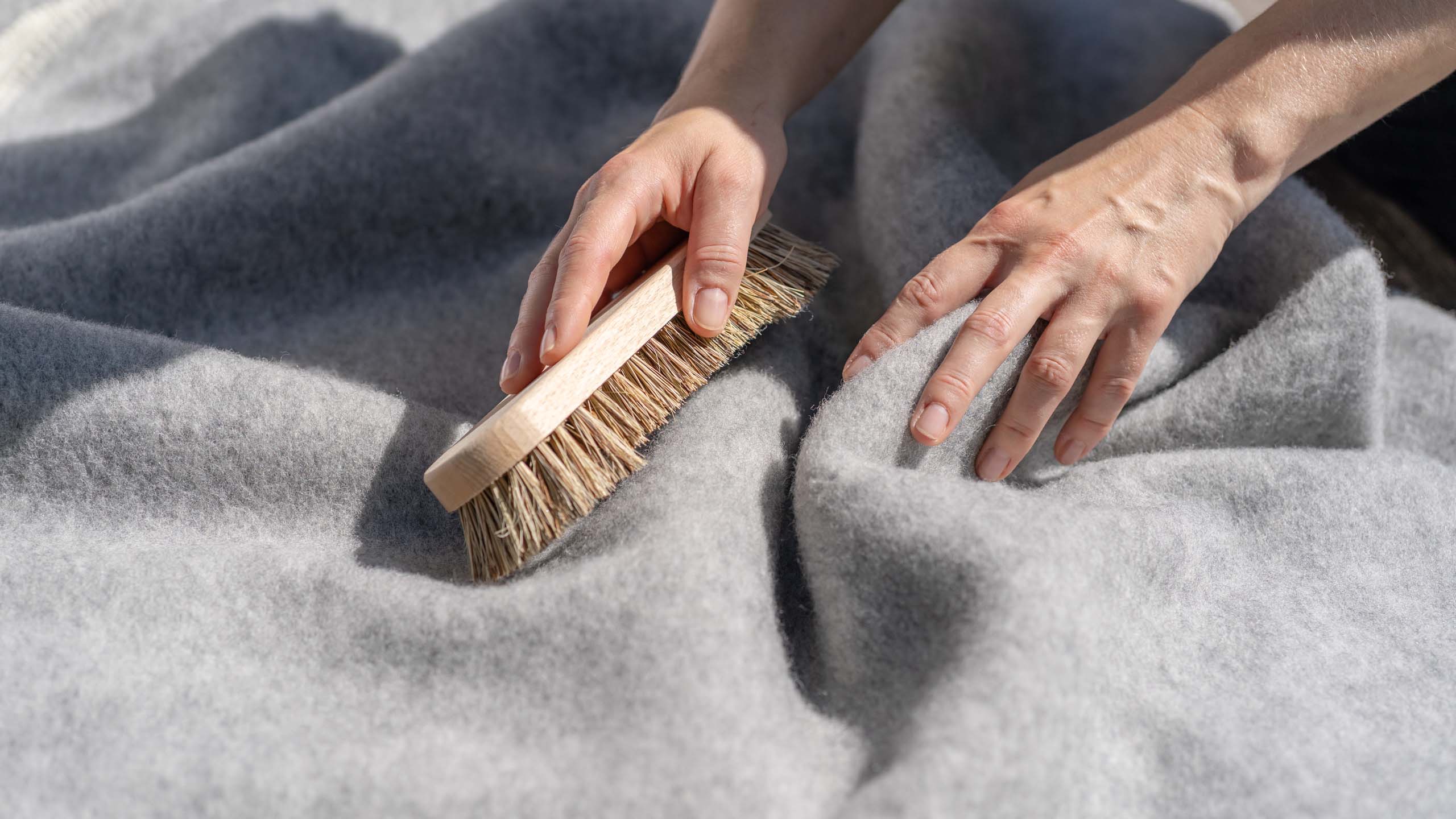

Wool blankets have a reputation for being high-maintenance, and honestly, most of that reputation comes from one bad laundry day. Someone throws a wool blanket in with a regular hot wash, pulls it out an hour later half its original size and stiff as cardboard, and decides wool just can’t be washed at home. It can. You just have to understand what actually ruins wool in the first place, because once that clicks, the rest of this is easy.
Why Wool Shrinks in the First Place
Wool fiber is covered in microscopic scales — think of them like tiny overlapping shingles on a roof. Under normal conditions those scales lie flat. But hit wool with heat, agitation, and sudden temperature changes all at once, and the scales open up and grab onto each other. That’s called felting, and it’s permanent — there’s no undoing it once it’s happened. So every rule about washing wool really comes down to avoiding three things: heat, rough handling, and drastic temperature swings.
Once you know that, you don’t need to memorize a checklist. You just need to keep the water cool, be gentle, and skip the dryer.
Check the Label First
Before anything else, look for a care tag. If it says “dry clean only,” take that seriously — some wool blends and certain weaves genuinely don’t hold up to water, and a professional cleaner is worth the cost over risking the blanket. If it says machine washable, great, you’ve got an easier path. If there’s no label at all, hand washing is the safer default.
Hand Washing (the Safest Option)
For most wool blankets, this is the method to reach for, especially with anything vintage, heavily woven, or expensive enough that you don’t want to gamble.
- Fill a bathtub or a large basin with cool or lukewarm water — never hot.
- Add a small amount of wool-specific detergent, or a mild, fragrance-free soap if you don’t have one on hand. Skip anything with enzymes or bleach.
- Submerge the blanket fully and let it soak for about 15 minutes.
- Gently press and lift the fabric through the water to work the soap through — no rubbing, no scrubbing, no wringing.
- Drain the water and refill with clean, cool water. Press the blanket through it the same way to rinse.
- Repeat the rinse until the water runs clear with no soap suds left.
The instinct to wring it out like a towel is a real risk here — twisting wool fibers while they’re wet is one of the fastest ways to felt them. Press the water out instead.
Machine Washing (Only If the Label Allows It)
If your blanket is labeled machine washable, you can use your washer’s wool or delicate cycle — cold water, low or no spin. Skip your regular detergent and use something formulated for wool. It’s worth washing the blanket on its own or inside a large mesh laundry bag rather than with anything else, just to cut down on friction during the cycle.
Drying — This Part Actually Matters Most
More wool blankets get damaged in the drying stage than the washing stage. A few rules that aren’t optional:
- Never put it in the dryer. Tumble drying is one of the fastest ways to felt and shrink wool, heat setting or not.
- Don’t hang it in direct sun. Sunlight can fade the color and dry the fibers too quickly, leaving them coarse.
- Dry flat, not hanging by one edge. A wet wool blanket is heavy, and hanging it from a line or hook can stretch it out of shape. Lay it flat on a drying rack, or over towels indoors, and reposition it occasionally so it dries evenly.
- Press out water with towels first. Roll the blanket in a couple of dry towels and press gently to pull out extra moisture before laying it flat — it cuts drying time down significantly.
Expect it to take a while. Depending on humidity and blanket thickness, full drying can take the better part of a day.
How Often You Actually Need to Wash It
This is the part people get wrong most — wool blankets don’t need frequent washing, and washing them too often actually wears them out faster. Wool is naturally resistant to odor and dirt, and simply airing a blanket outside for an hour or two often refreshes it without water at all. Most guidance from wool specialists, including the Woolmark care guidelines, suggests washing wool blankets only a few times a year unless there’s an actual stain to deal with.
Dealing With Stains Without a Full Wash
For a spot stain, you don’t need to wash the whole blanket. Dab (don’t rub) the area with a little wool-safe detergent diluted in cool water, let it sit for about 10 minutes to loosen the stain, then rinse just that section with a clean, damp cloth. Rubbing spreads the stain and roughs up the fibers, so patience here saves you a lot of trouble.
The Short Version
Cool water, gentle handling, wool-specific detergent, and flat air drying — that’s genuinely the whole system. Skip the dryer, skip the hot water, don’t wring it, and a good wool blanket will easily last for decades.
Read More: https://stepmagazine.online/
